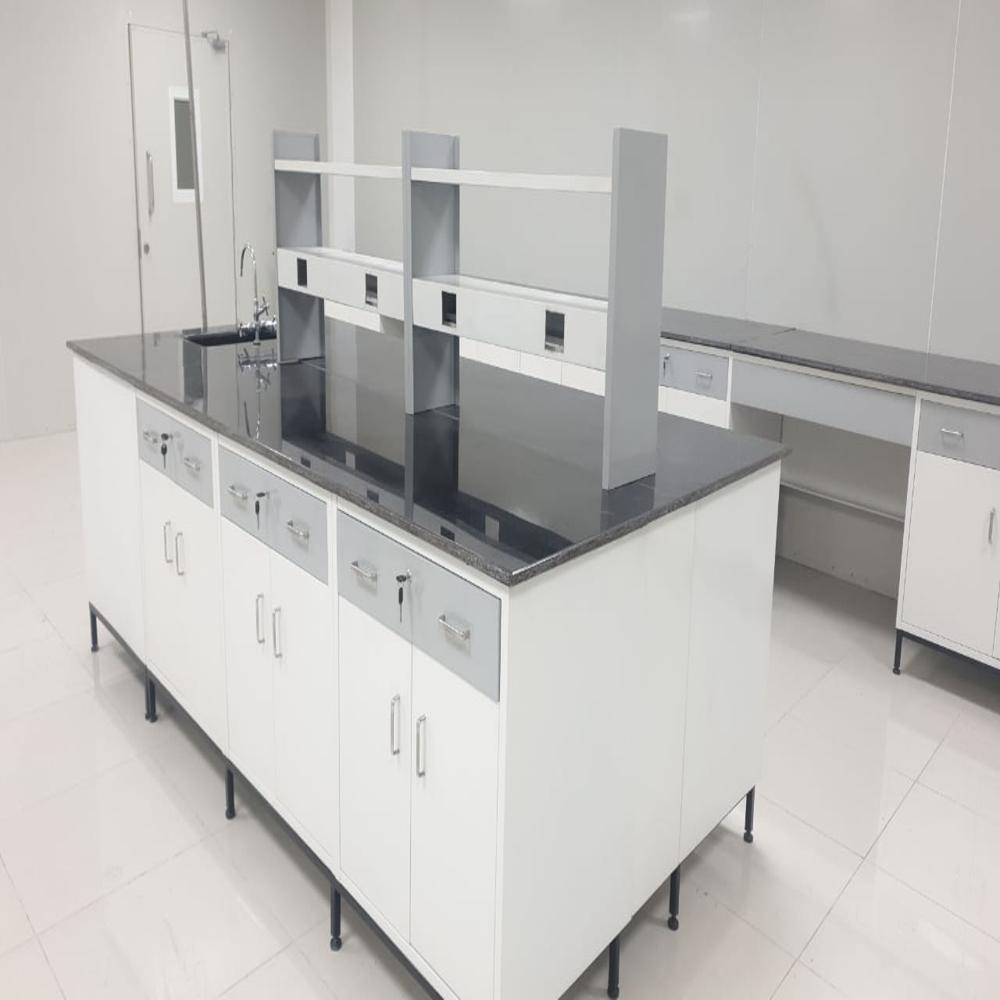
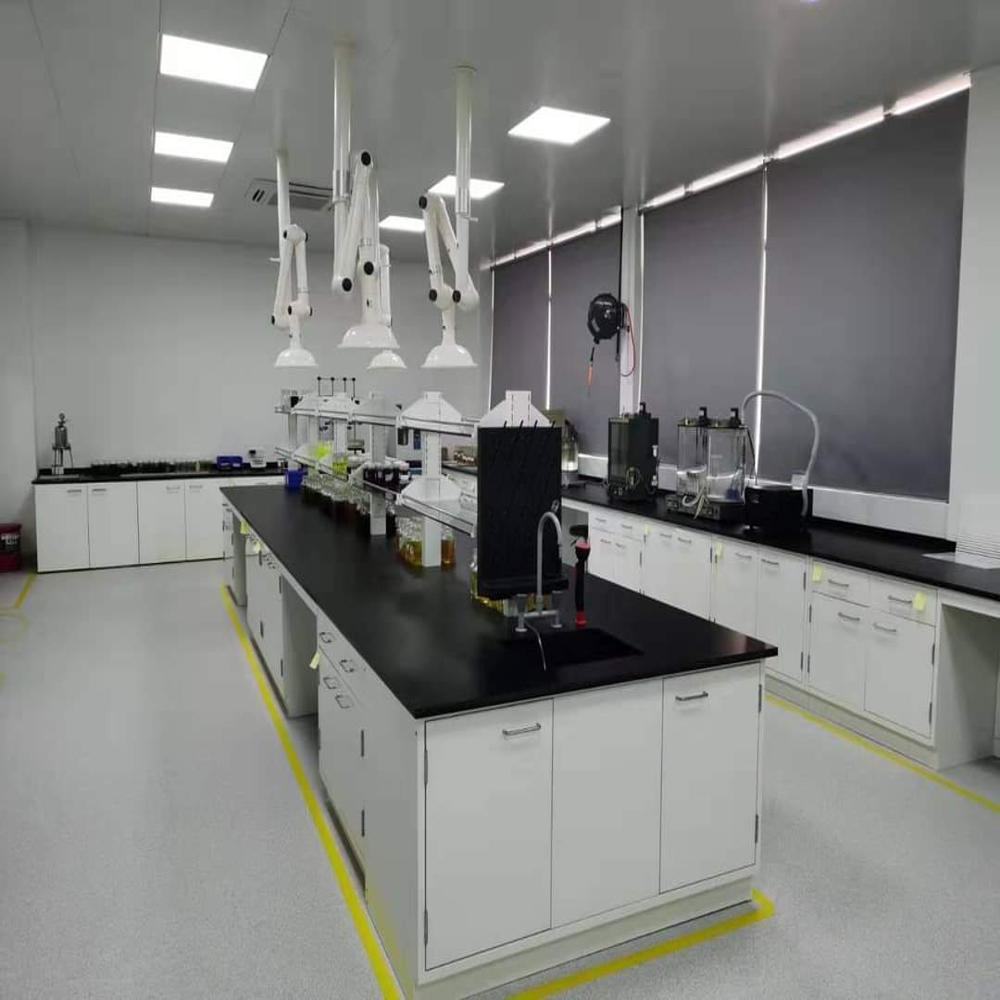
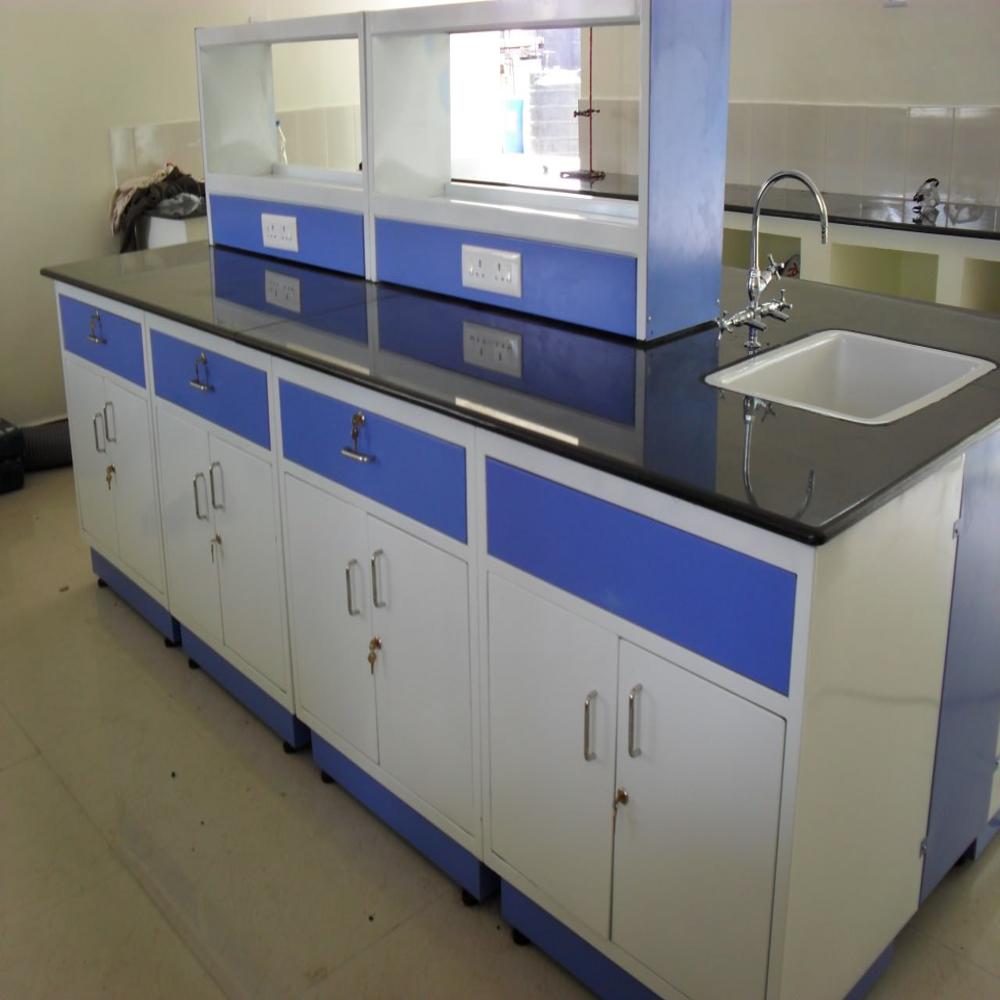
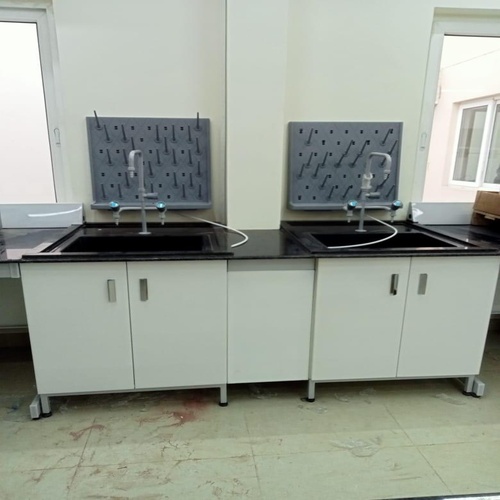
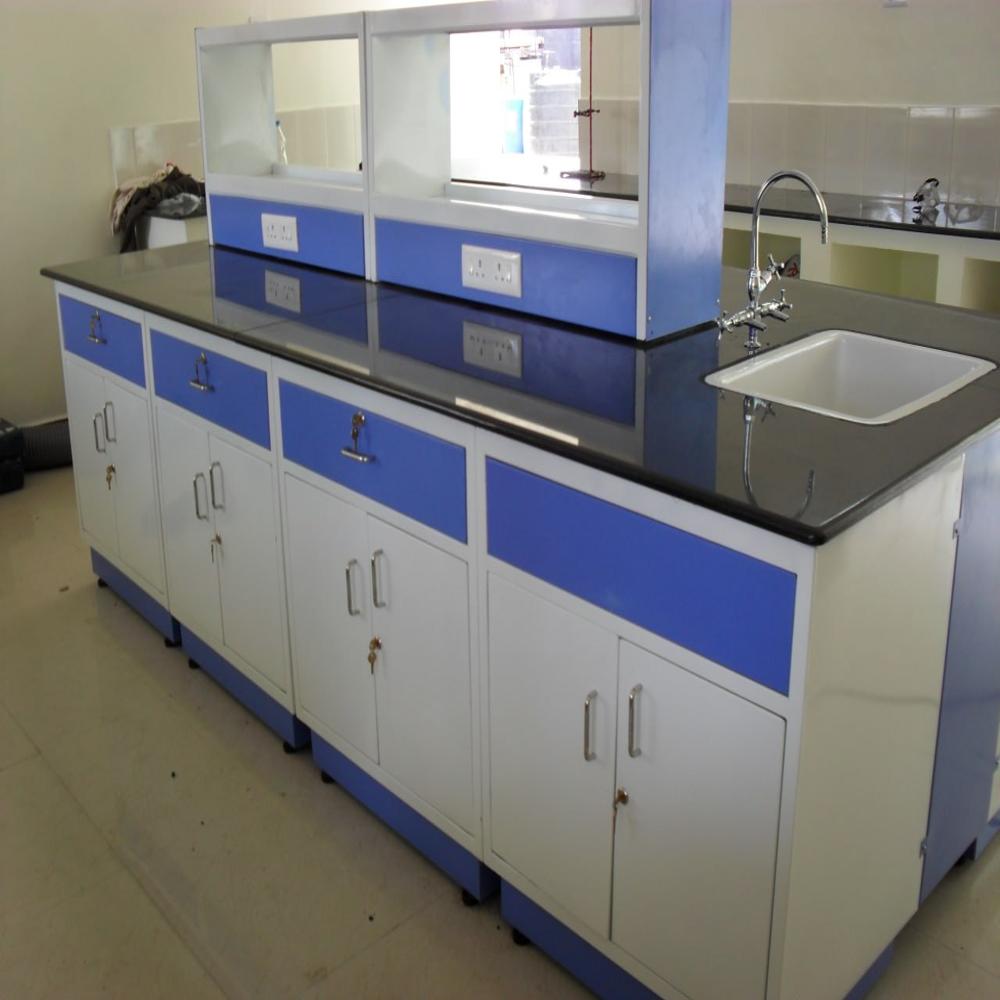
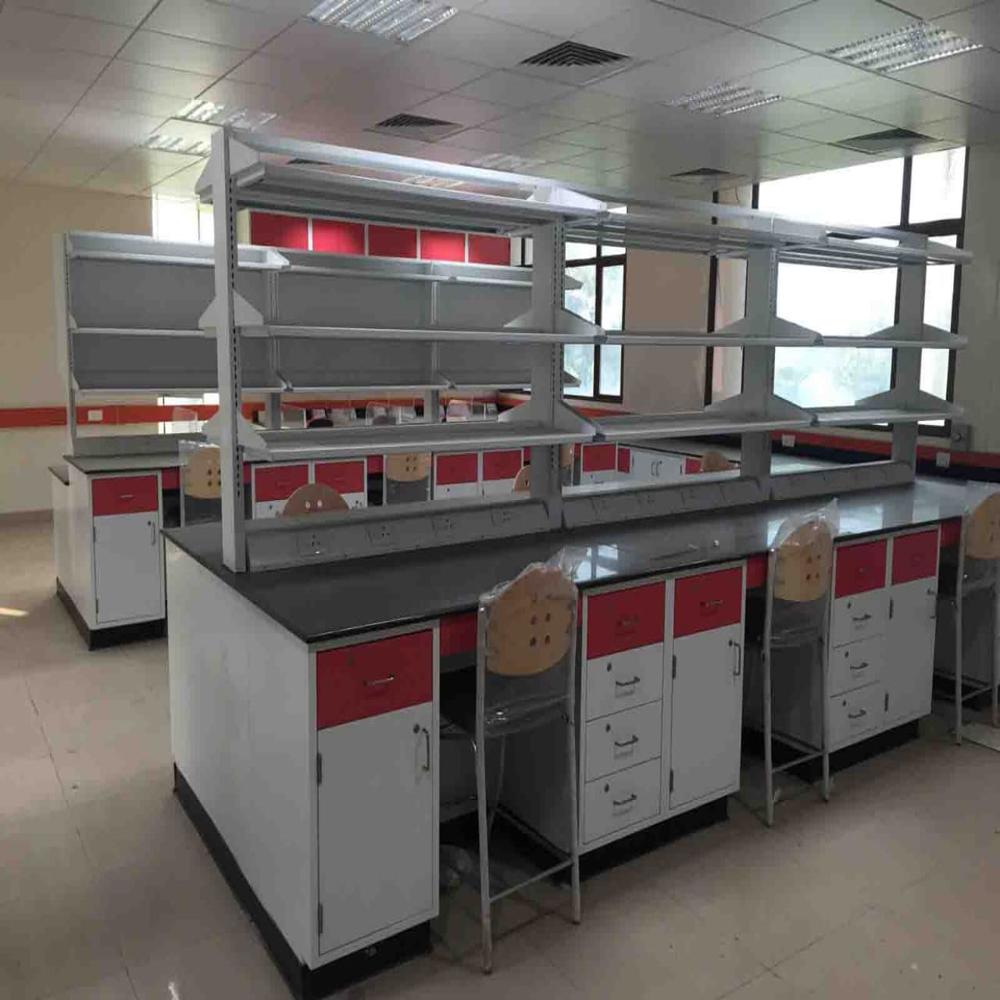
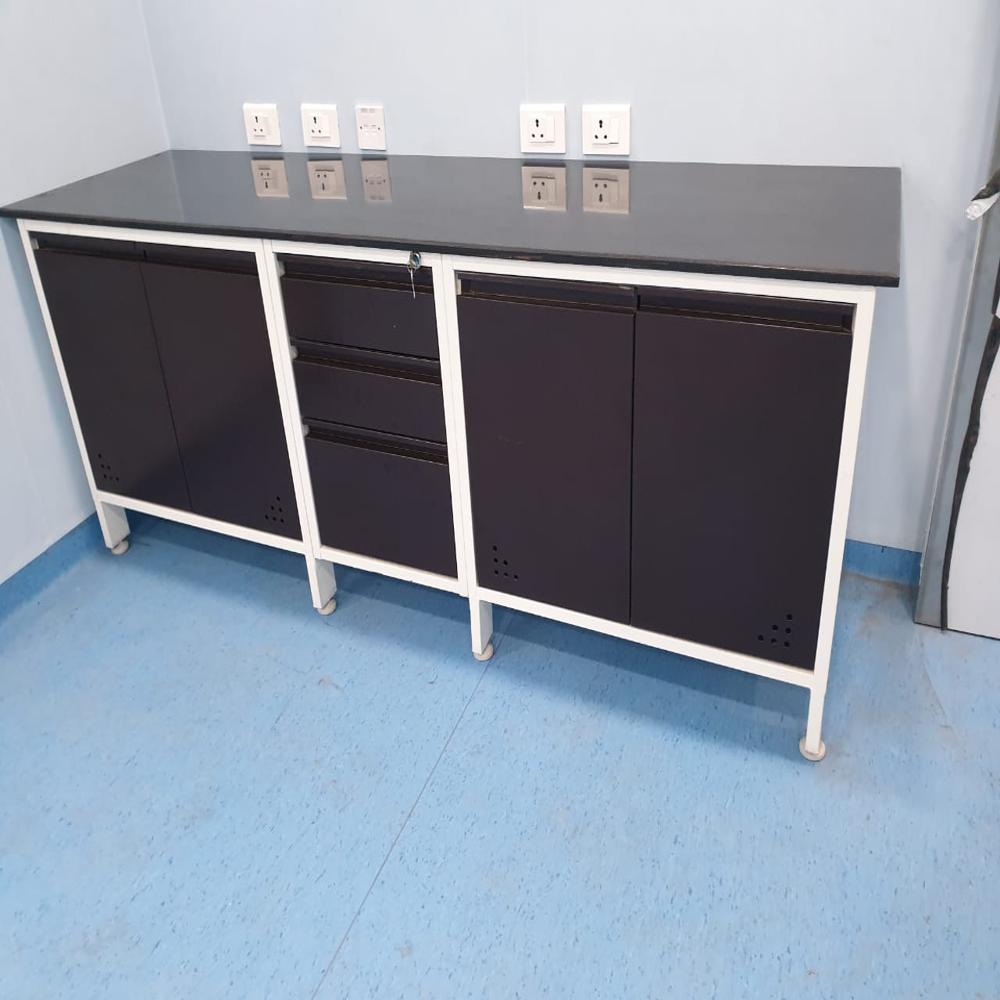
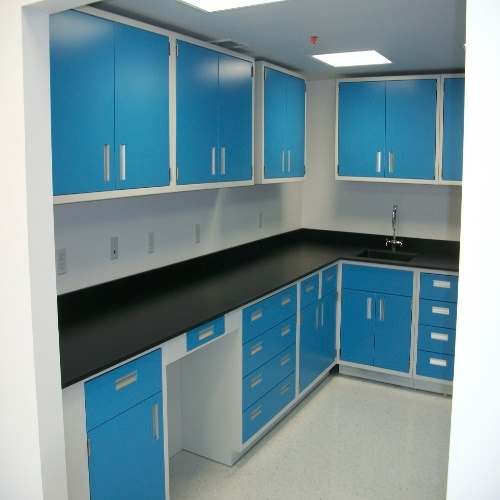
An island table (laboratory island bench) is a centrally placed workstation used in laboratories to allow multiple users to work simultaneously from all sides. It is commonly used for chemical testing, sample preparation, light instrument placement, and educational or R&D activities, making it the main working hub of the lab. The design is based on the principle of a centralized workspace with 360-degree accessibility, where utilities like gas, water, electricity, and drainage are integrated within the structure to improve workflow efficiency and reduce unnecessary movement. Typically, the structure is made of mild steel with epoxy powder coating or stainless steel for corrosion resistance, while the worktop can be granite, epoxy resin, phenolic resin, or ceramic depending on chemical resistance requirements. Standard dimensions usually include a height of around 800850 mm and widths of 12001500 mm, with lengths customized as per lab layout. The table also includes under-counter storage cabinets, drawers, and optional reagent racks, along with built-in electrical sockets, gas valves, and water taps. Overall, an island table enhances space utilization, supports multi-user operations, and ensures an organized and efficient laboratory workflow.