About Laboratory Centrifuge Machine
Avalble on your requirment we have Both specification Heavy Duty MS body Microprocessor Based with brushless inductionmotor Maximum speed 20000 rpm with 12 x 2ml rotor head. Hydraulic lidwith electronic lid lock. Fitted with 0-99 minutes countdown timer, digitalRPM meter. Supplied without Rotor Head.
Precision Separation Performance
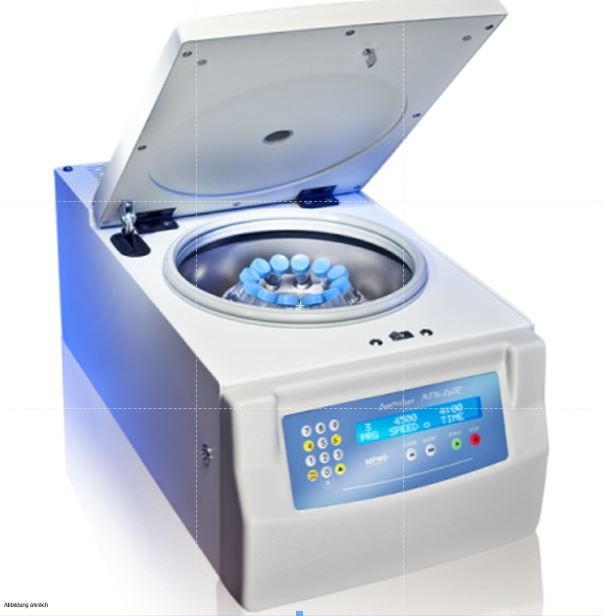
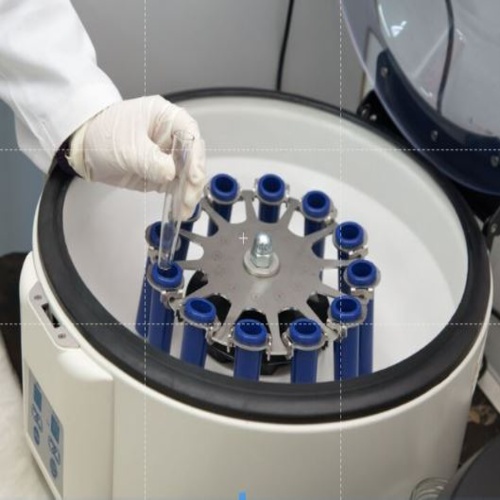
This laboratory centrifuge ensures efficient and consistent separation of components through precise control systems. The machine supports up to 12 tubes at a time, each with a 15 ml capacity, and achieves centrifugal speeds up to 4000 RPM with an RCF of 2200 x g. Its fixed angle rotor guarantees optimal sedimentation, making it suitable for a wide range of applications.
Enhanced Safety & Durability
Designed with the user's safety in mind, the centrifuge incorporates features like a lid interlock mechanism and imbalance detection. The robust stainless steel drum and powder-coated metal housing provide extra longevity and resistance to corrosion, ensuring smooth operation even with frequent laboratory use.
Ease of Operation & Maintenance
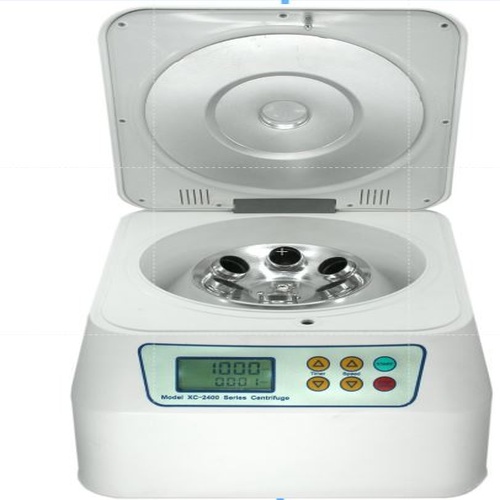
Featuring manual or analog controls and a clear analog RPM indicator, this centrifuge is user-friendly and simple to operate. Maintenance is straightforward thanks to easy-to-clean stainless steel components and accessible rotor configuration. Its compact rectangular design allows convenient placement on any laboratory benchtop.
FAQ's of Laboratory Centrifuge Machine:
Q: How does the laboratory centrifuge ensure user safety during operation?
A: The centrifuge is equipped with a lid interlock mechanism that prevents the lid from opening during operation and an imbalance detection system that automatically stops the machine if uneven tube loading is detected, thus minimizing risks to the user.
Q: What materials are used in the construction of this bench top centrifuge?
A: The centrifuge features a stainless steel drum and chamber for durability, a powder-coated outer body for additional protection, and a robust combination of metal and plastic for structural stability and safety.
Q: When should this centrifuge be used in laboratory protocols?
A: This centrifuge is ideal for applications involving the separation of fluids, gases, or liquid samples by density, such as blood separation, protein extraction, or cell component isolation-especially when moderate RCF and precise timing are necessary.
Q: Where can this centrifuge be installed and how much space is needed?
A: Due to its compact dimensions (410 x 340 x 310 mm) and bench top design, the centrifuge can be conveniently placed on most laboratory workbenches, requiring minimal space while offering easy access for loading and unloading samples.
Q: What type and size of tubes are compatible with the rotor?
A: The fixed angle rotor configuration supports up to 12 tubes, each with a 15 ml capacity, making it suitable for standard sample preparation protocols that require this volume.
Q: How is the centrifuge operated and monitored during use?
A: Users control the centrifuge via manual or analog controls, set the desired speed and time, and monitor operation through an analog RPM indicator for precise adjustments and reliable results.
Q: What are the main benefits of using this centrifuge in a laboratory setting?
A: The machine offers fast, uniform, and safe separation of sample components. Its quiet operation, robust construction, and safety mechanisms contribute to reliable performance and enhanced laboratory productivity.






 Send Inquiry



 Send Inquiry

 Send Inquiry


 English
 Spanish
 French
 German
 Italian
 Chinese (Simplified)
 Japanese
 Korean
 Arabic
 Portuguese